
Everyday Habits for Healthy Testosterone Levels
Four everyday inputs hold the whole picture — how you sleep, how you eat, how you train, and how much stress you carry week to week.
An editorial resource, not a program
Most men in Indonesia don't need a special program to look after their hormone health. They need a clear picture of what actually moves the needle: how you sleep, how you eat, how you train, and how much stress you carry week to week. This site collects those everyday pieces into one place, written for readers in Makassar, Jakarta, Surabaya, and everywhere in between.
We are not selling a supplement or a shortcut. Our guides focus on food you already eat, routines that fit a normal work schedule, and habits you can keep for years rather than weeks.

The first lever
Sleep comes first
If you change one thing, change your sleep. CNN Indonesia covered lifestyle habits that can lower testosterone and noted that poor sleep quality can disrupt hormone production. That local coverage lines up with what the NHS and Mayo Clinic say in their own public guidance: rest is foundational, not optional.
Most adults do best with seven to nine hours, and timing matters as much as total hours. Going to bed and waking at similar times, keeping the room dark, and cutting late caffeine are simple starting points that cost nothing.
7–9 hours
the standard public range for adults

Nutrients worth watching in a normal Indonesian diet
Vitamin D
Sunlight and fish
Office work, covered clothing and indoor routines cut sun exposure for many people in Indonesia, so the Men's Health Foundation Canada guide lists vitamin D among the nutrients to watch.
Zinc
Eggs, fish, seeds
Zinc appears in the everyday foods this region already eats, so the practical move is a varied plate rather than a new shelf of products.
Magnesium
Greens, nuts, tempeh
Leafy greens, nuts, seeds and tempeh carry magnesium and sit inside meals readers already cook, which is why the food guide starts there.
Stress and the habits that work against you
Chronic stress, heavy alcohol use, and smoking are commonly discussed as factors that can pull hormone balance in the wrong direction. You don't need to be perfect. You do need an honest look at how much of each you're carrying.
A short walk after work
Same habit, same time, so it survives a busy week.
A fixed bedtime
Consistency does more for rest than any single early night.
Fewer late nights
Drinking less and cutting back on smoking usually take longer to change, so start with the sleep clock.
Eat food, not formulas
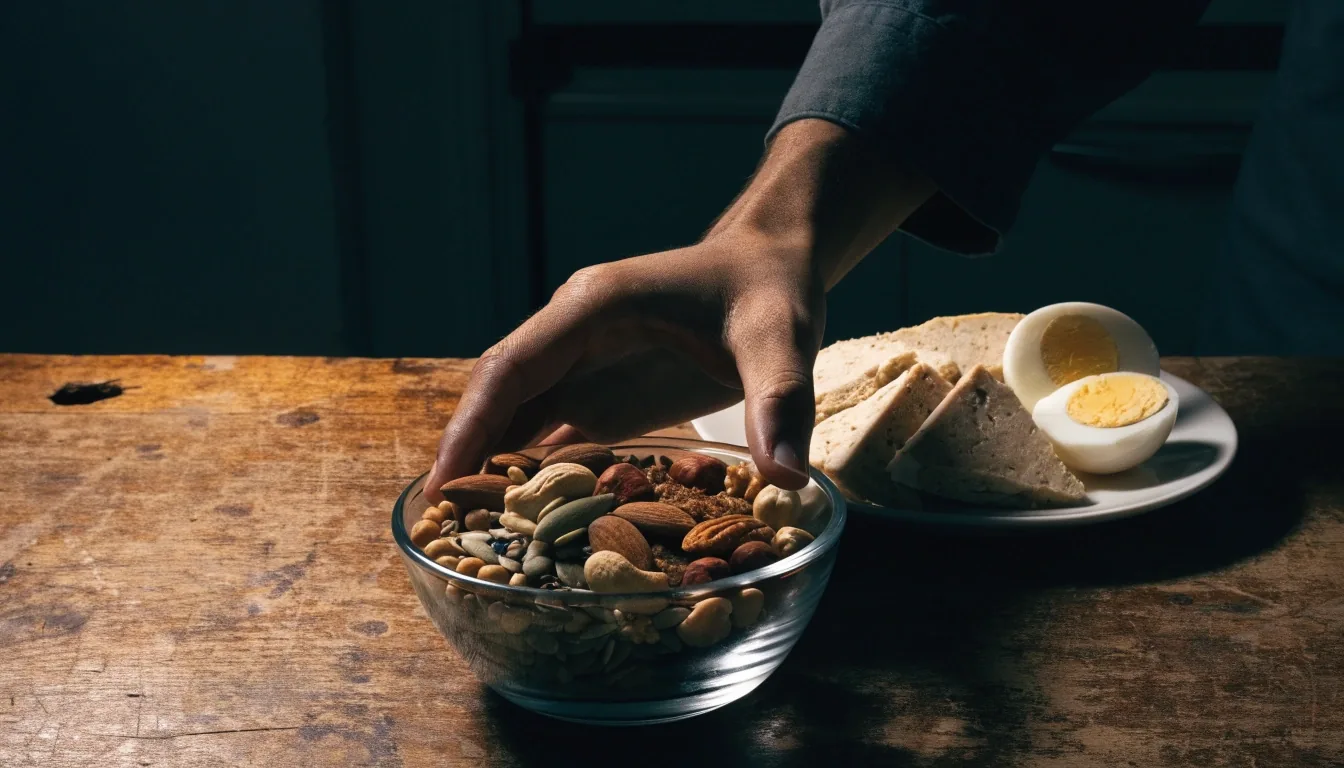
The nutrition angle is where Indonesian readers have a real advantage. Fish, eggs, tempeh, leafy greens, nuts, and seeds are already part of everyday meals. The Men's Health Foundation Canada nutrition guide highlights a Mediterranean-style pattern with whole grains, fish, vegetables, nuts, and seeds.
Harvard Health Publishing has also pointed to fatty fish and extra virgin olive oil among foods linked with better testosterone-related outcomes. You can build a week of meals around that without importing anything.
See the food and nutrient guideTrain with resistance, not just cardio
Resistance training and compound exercises show up again and again in lifestyle guidance for men. Squats, presses, rows, and hinges work large muscle groups and fit into three or four sessions a week. Cardio still matters for heart health, but it plays a supporting role rather than the lead.
Our training guide breaks down a beginner-friendly weekly structure and explains why recovery days are part of the plan, not a break from it.
Build a training routine
3–4 sessions
compound lifts across a normal week
Weeks, not days
the honest window for training adaptations
Start where you actually are
Start with the page that matches your situation. If sleep is your weak point, go to Sleep and Recovery. If you already train but eat poorly, the Food and Nutrient Guide is a better entry point. If you're not sure, the habits page gives you the full picture.
Each guide is written to be read once and applied, not bookmarked and forgotten. Where we cite a source, it's a recognized health publisher or an Indonesian institution, not a product page.
Why we keep the language careful
This topic attracts exaggeration. You'll find claims online about dramatic changes in days, which is not how the body works. We stick to what public health sources like the NHS and Mayo Clinic describe: gradual, lifestyle-driven factors that support normal function over time.
That means no promises about specific results, and no before-and-after framing. What we offer is plain information you can check against your own routine.
You'll notice we avoid precise figures unless a source gives them. "Seven to nine hours of sleep" is standard public guidance. Nutrient amounts depend on your body, your diet, and your doctor's advice. We'd rather say less and stay accurate than fill space with invented specifics.
Check our editorial standardsWhat we don't do
We don't sell supplements, and we don't recommend specific brands. We don't diagnose anything or tell you to stop medication. If you have persistent symptoms such as fatigue, low mood, or changes in libido, that's a conversation for a doctor, not a website.
Our role is narrower: explain the lifestyle factors that public health sources consistently mention, and help you apply them.
This site is a lifestyle resource, not medical advice. Supplements discussed anywhere in our guides are not medicines, and any decision about them belongs with a qualified professional who knows your history.
Written for readers in Indonesia
Our guidance keeps local eating patterns in mind. Rice, fish, tempeh, tahu, and tropical vegetables form the base of many meals here, and that's a reasonable foundation for this topic. Gadjah Mada University's public education work on nutrition and physical activity supports the idea that local food patterns can carry solid nutritional value.
We also pay attention to how the topic appears in Indonesian media, including mainstream outlets like CNN Indonesia, so the tone feels familiar rather than translated.

Questions readers ask first
Do I need supplements to support healthy testosterone levels?
No. Public health sources like the NHS and Mayo Clinic focus on sleep, physical activity, and diet rather than supplements. Food-first approaches are the mainstream recommendation.
How long before lifestyle changes matter?
This varies by person and by which factor you change. Sleep often shifts within days, while body weight and training adaptations take weeks to months. We don't publish specific timelines because individual results differ.
Is this site medical advice?
No. We're an editorial resource. For symptoms or concerns, speak with a qualified doctor.
Pick one area, hold it a month
The four pillars on this site — sleep, food, training, and stress — overlap. Better sleep makes training easier. Regular training improves sleep. Good food supports both. Stress undermines all three.
You don't need to fix everything at once. Pick one area, hold it for a month, then add the next. That's the whole method.
Editorial desk
Jl. Sultan Hasanuddin No. 45, Sawerigading, Ujung Pandang, Makassar, Sulawesi Selatan, 90115
Monday to Friday, 9:00 AM – 6:00 PM
Write to the editorial desk