
NT
Dark kitchen counter at night with a warm lamp pool falling on eggs, nuts and dark leafy greens beside a bowl of water

Food and Nutrients for Hormone Balance

What you eat most days shapes more than one meal does. Here is what public health sources connect to hormone balance, in ingredients you can buy in Makassar.

The pattern matters more than any one food

No single food fixes your hormones, and no food ruins them in one meal. Harvard Health Publishing describes balanced diets with healthy fats, protein, and nutrient-dense vegetables as supportive of hormone production. That is the frame for everything below.

Change the pattern, not the ingredient

If most of your week is packaged snacks and sweet drinks, reworking that base does more than adding any single ingredient on top. Aim for real food first, then adjust details.

What this guide covers

Healthy fats, zinc, magnesium, vitamin D, protein, and produce, with the local versions of each. Familiar foods from Indonesian markets and warungs, not an imported shopping list.

2–3 fish meals / week

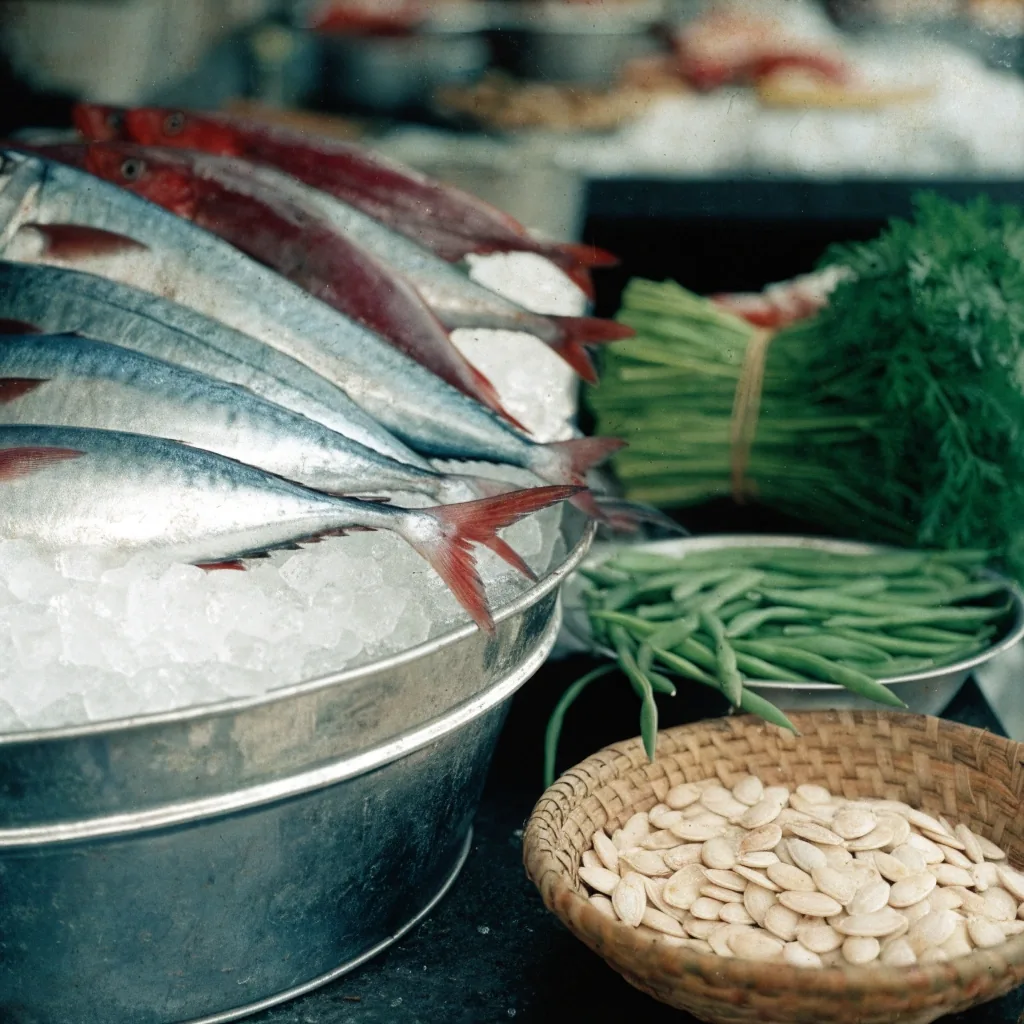
Fish on crushed ice beside a basket of pumpkin seeds, green beans and a bundle of water spinach on a market counter

Build the plate, not the supplement shelf

Fish, eggs, legumes, greens and nuts do the daily work. Supplements only make sense when a doctor has found something specific to correct.

See the training guide

Where food stops and testing starts

Most nutrition guidance for men points at the plate first. If you have a diagnosed deficiency, a doctor may suggest a specific supplement and a follow-up test. General supplementation without testing is not what public health sources emphasize, and we do not recommend doses here.

Food first. Test if there is a reason.

What a week looks like when it is written down

A balanced diet built around real food is the recurring recommendation across public health writing, and it is easier to judge a week than a single meal. The numbers at the side are the shape most sources describe: fish a few times, protein at most meals, vegetables with each main dish, nuts as the snack you keep on the counter rather than the packet you open at midnight. None of it is a rulebook. Adjust for your budget, who cooks at home, and what the market has that week.

Where a specific figure does exist in this niche, it usually comes from a lab result rather than a menu. Vitamin D and zinc in particular are the two nutrients people ask about most, and both are better discussed with a doctor who can look at your actual level than guessed at from a food list. The rest of this page stays on the food side.

Four nutrients, and where they actually come from here

Each row below is a nutrient that shows up in most nutrition discussions about male hormone health, followed by the everyday sources that are realistic in an Indonesian kitchen. Local names are included because that is what you will actually ask for at the market.

Healthy fats

Fats are not the enemy here. Fatty fish, eggs, nuts, seeds, avocado and olive oil are commonly mentioned in this context, and Harvard Health Publishing specifically highlighted fatty fish and extra virgin olive oil among foods linked with better testosterone-related outcomes. Ikan kembung, ikan tongkol and sardines have profiles close to the imported fish, so you do not need salmon to get there.

kembung, tongkol, sardines, avocado

Zinc

The Men's Health Foundation Canada guide lists zinc among nutrients to watch for male hormone health, and food sources include meat, shellfish, eggs, legumes and seeds. Locally, eggs, beef, chicken and pumpkin seeds are the practical picks. Oysters are the classic source, though in most Indonesian cities they are a splurge rather than a weekly habit.

eggs, beef, chicken, pumpkin seeds

Magnesium

Magnesium shows up regularly alongside zinc and vitamin D. Green leafy vegetables, nuts, seeds, whole grains and legumes all contribute. Sayur bayam, kacang hijau and tempeh fit into daily meals without any effort at all, which is the point: a nutrient you get by accident is a nutrient you keep getting.

bayam, kacang hijau, tempeh

Vitamin D

Vitamin D is unusual because food sources are limited: fatty fish, egg yolks and fortified products cover part of it, and sun exposure covers the rest. Office work and covered clothing reduce what you get even in a tropical country. The Men's Health Foundation Canada guide includes it among nutrients to watch. If you are concerned about your level, a doctor can test it, and we do not recommend doses here.

fatty fish, egg yolks, sunlight
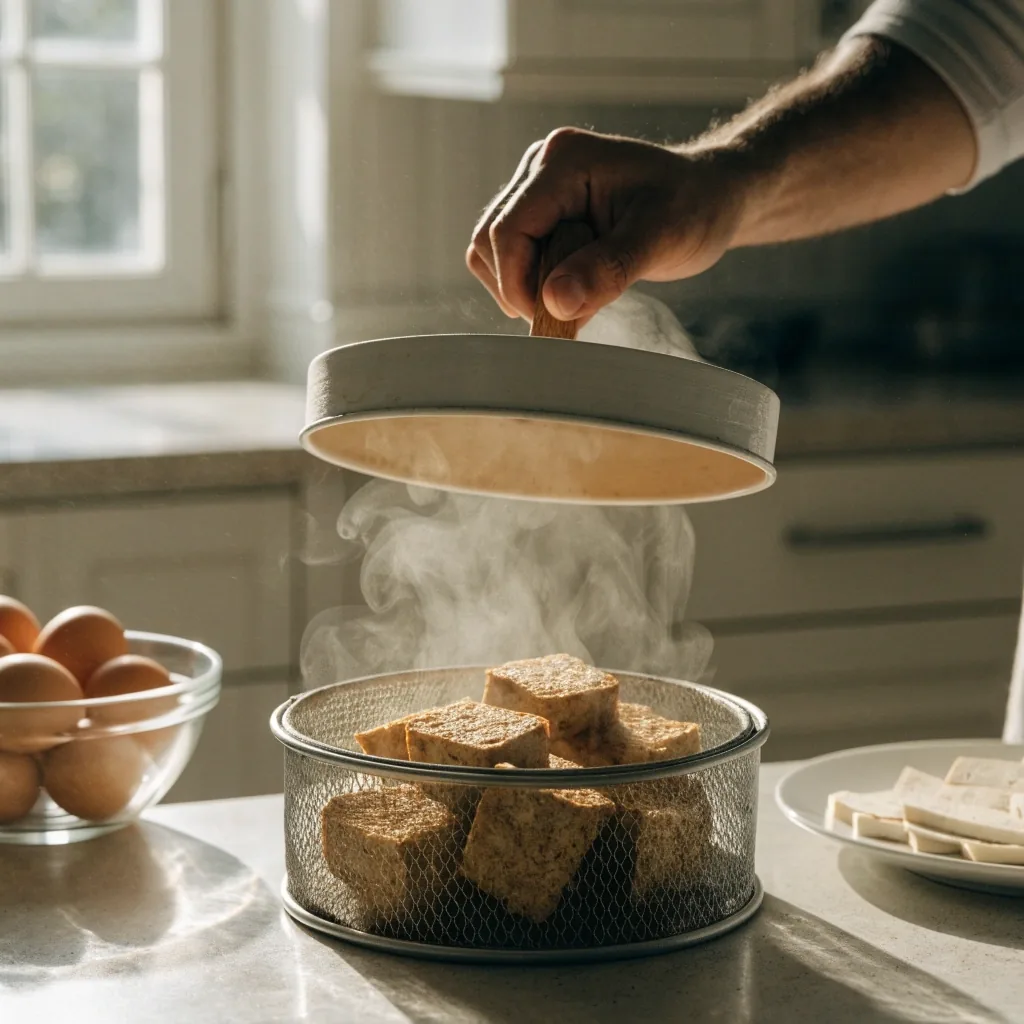
Fresh brown eggs beside a wrapped block of tempeh and a dish of firm tofu on a light kitchen counter

Protein at every meal, not only at dinner

Protein supports muscle, appetite and recovery, and spreading it across the day is generally easier on digestion than loading everything into one evening plate. Eggs, fish, chicken, beef, tofu and tempeh are all standard options. Tempeh and tahu deserve the extra mention: they are affordable, available everywhere, and they sit comfortably on the plant side of a balanced diet without asking you to change cuisines.
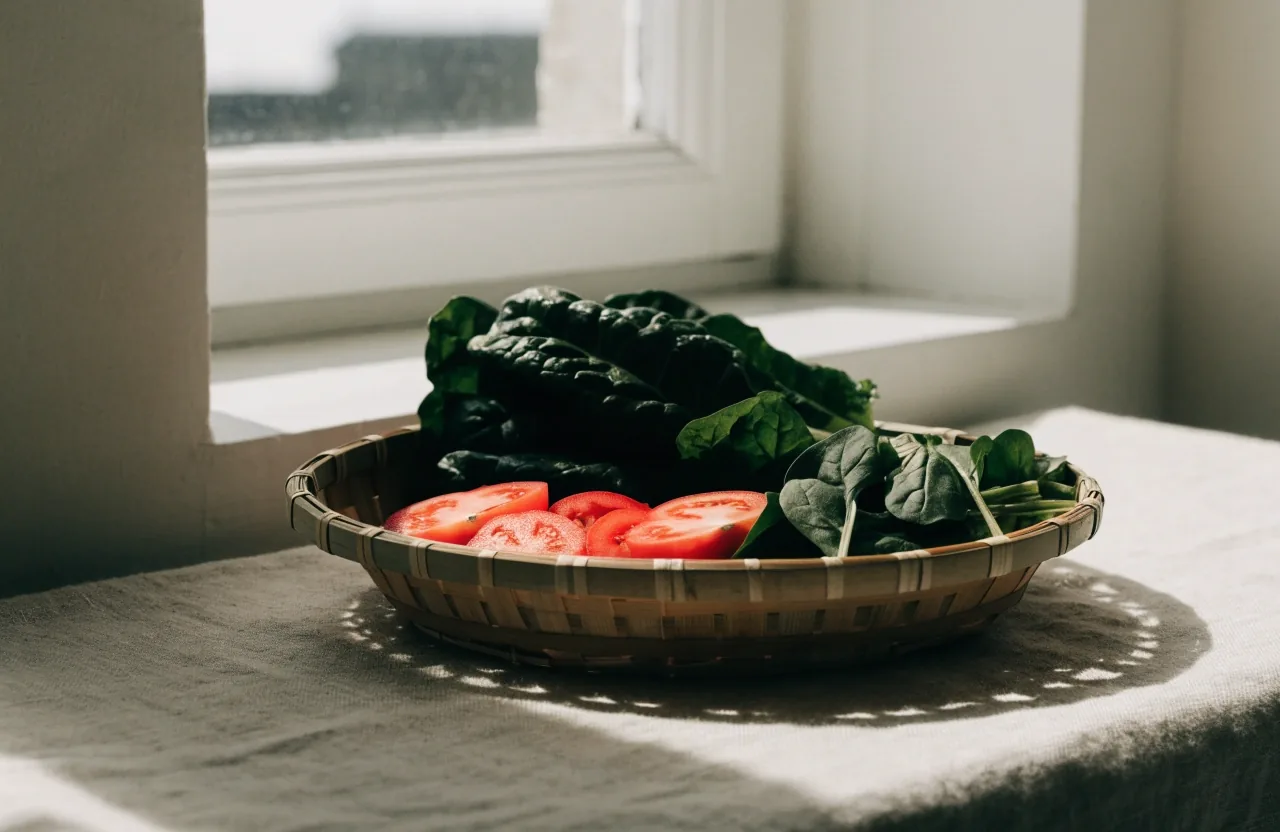
Water spinach, mustard greens, spinach and tomatoes arranged on a pale woven mat in daylight

Vegetables and fruit, without the fuss

Nutrient-dense vegetables support overall health, and hormone function depends on overall health. Dark leafy greens, cruciferous vegetables, tomatoes and colourful fruit cover most of the bases. Kangkung, sawi, bayam and the tropical fruit on every corner make this the easiest part of the list.

What to limit, and how much

Highly processed foods, sugary drinks and heavy alcohol are the main items that work against a balanced diet. You do not need to eliminate them. Reducing frequency and portion size is enough for most men, and late heavy meals also tend to disturb sleep, which connects straight to recovery.

fewer nights, smaller portions

Eating out in Indonesia without giving up the pattern

Warung food can be part of a solid diet. Grilled fish, chicken, vegetables and rice-based meals are common, and the issue is usually fried preparation and sweet drinks rather than the cuisine itself. Ordering tahu, tempeh and vegetables alongside your main dish is a small adjustment. So is water instead of sweet tea, and it costs nothing.

Grilled or steamed fish keep as the base of the plate
Extra tahu and tempeh cheap protein, order it alongside
Vegetable side add one to every warung meal
Water instead of sweet tea the simplest swap on this list

The point is not a strict menu. It is that the same pattern survives a lunch break, a family dinner, and a Friday night out, without a separate shopping trip or a new cuisine to learn.

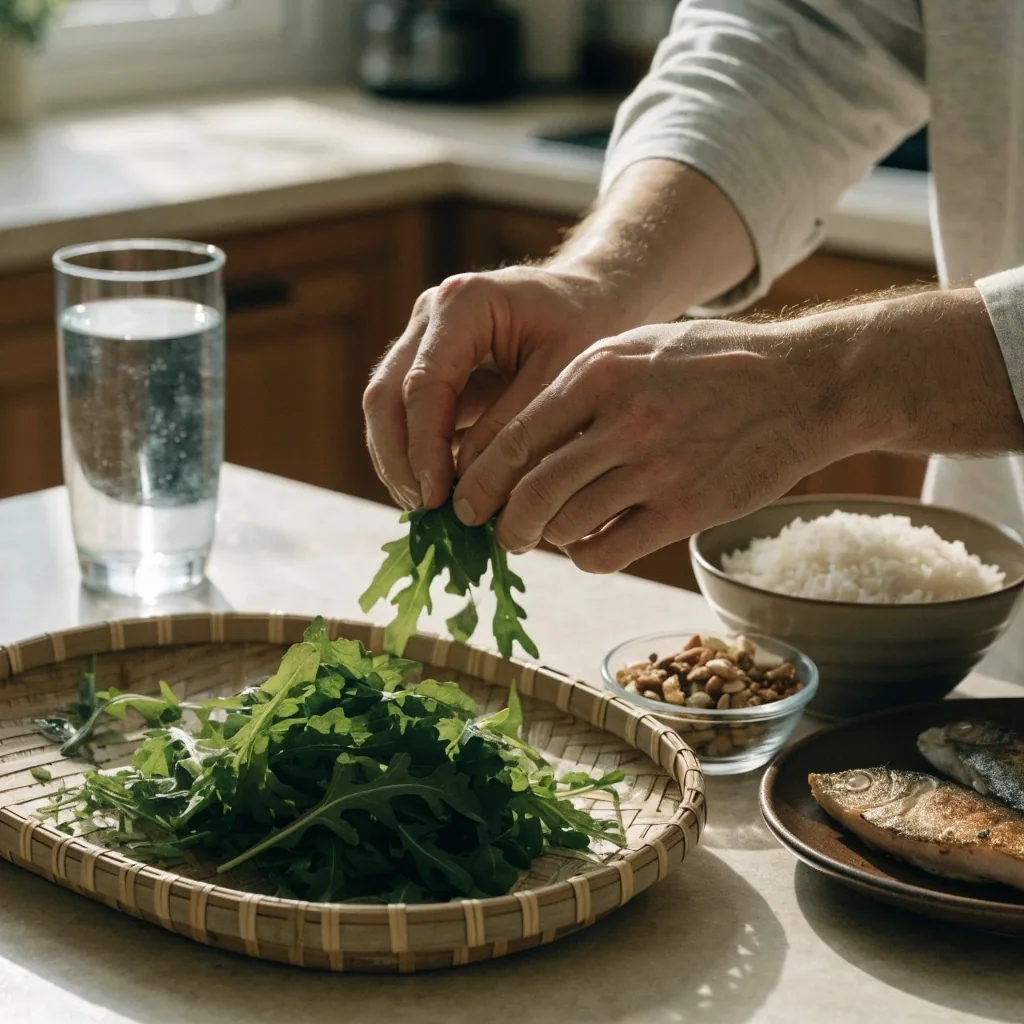
A simple daylit meal of rice, grilled fish, sauteed greens and a small dish of nuts with a glass of water

A Mediterranean-style pattern, localized

The Men's Health Foundation Canada nutrition guide highlights a Mediterranean-style eating pattern built on whole grains, fish, vegetables, nuts and seeds. It translates to Indonesian food culture with almost no friction. Rice stays. Fish stays. You add more vegetables, a handful of nuts, and swap some fried snacks for fruit. Small substitutions, not a new cuisine.

A practical weekly shape: fish two or three times, eggs most days, legumes several times, vegetables at every main meal, nuts as a snack, fruit instead of dessert most nights. If you would rather start with the rest of the day around the plate, the sleeping and recovery side is on its own page.

Improve sleep and recovery

A note on supplements

food first, then test

Supplements are not the focus of this page. If a doctor has identified a specific deficiency, they may recommend one, and that recommendation belongs with your own results. Taking a general supplement without testing is not something we advise, and it is not what public health sources stress. Food first. Test if there is a reason. That is the sequence, and it is worth keeping in that order.

Nothing on this page is medical advice. It is an overview of what nutrition writing for men commonly covers, and how those foods appear in an Indonesian kitchen. If you are worried about your own level, the useful next step is a conversation with a qualified professional, not another ingredient list.

Questions that come up most

Short answers to the food questions readers ask most often. Fuller explanations live in the answers section of the site.

Browse all questions
Does one food really change your hormone levels?

No. What you eat most days is the part that matters, and it works alongside sleep, movement and stress. A single meal is a small input; a repeated pattern is the one that shows up in your energy, appetite and training.

Do I need expensive imported fish?

No. Ikan kembung, ikan tongkol and sardines are affordable and carry a similar nutritional profile to the fish usually named in imported nutrition writing. Buying what your market already sells is the practical answer.

Should I take a supplement for zinc or vitamin D?

Talk to a doctor first. If a specific deficiency has been identified, they can recommend what fits it. Taking supplements without testing is not what we advise, and dosage is not something we cover on this page.

Can I still eat warung food?

Yes. Grilled fish, chicken and rice-based plates are a normal part of a balanced week. Add a vegetable side, order tahu or tempeh with the main dish, and take water instead of sweet tea. The fried preparation and the sugary drinks are the parts worth reducing.

Start with one substitution this week

Pick the easiest change on this page: fruit instead of dessert, water instead of sweet tea, or one fish meal where the fried snack used to be. Then read how the other daily habits support the same goal, and how the guide is put together.

NaturalTest Indonesia

Jl. Sultan Hasanuddin No. 45, Sawerigading, Ujung Pandang, Makassar, Sulawesi Selatan, 90115

Contact NaturalTest Indonesia

This page is a general lifestyle overview, not medical advice. If you are worried about your own hormone level, a qualified professional is the right place to start.

Return to the home page